There’s a moment most of us know well. Many people often wonder about the difference between worry and overthinking when they find themselves lost in thought. In fact, understanding the difference between worry and overthinking can be the key to managing your thoughts effectively.
You start by thinking about something important. A deadline. A conversation. A responsibility that matters. It feels productive at first, like you are trying to stay ahead, trying to care, trying to get it right. Here, it can be helpful to reflect on the difference between worry and overthinking in these moments.
And then something shifts.
The thoughts don’t lead anywhere. They multiply. They get louder. Faster. Heavier. Sometimes, this is where the difference between overthinking and worry becomes obvious.
“What if I mess this up?”
“What if that leads to something worse?”
“What if everything falls apart?”
And just like that, you are no longer planning. You are spiraling. Notice in these moments the difference between worry and overthinking, as your thoughts take over.
In The Worry Trap, this is described as the difference between worry that serves you and worry that traps you. And knowing the difference can change everything.
Because not all worry is the problem. Some worry is actually helpful. Still, recognizing the difference between worry and overthinking is crucial.
🧠 Why
There is a difference between worry that helps you and worry that holds you hostage. For many people, recognizing the difference between worry and overthinking brings relief.
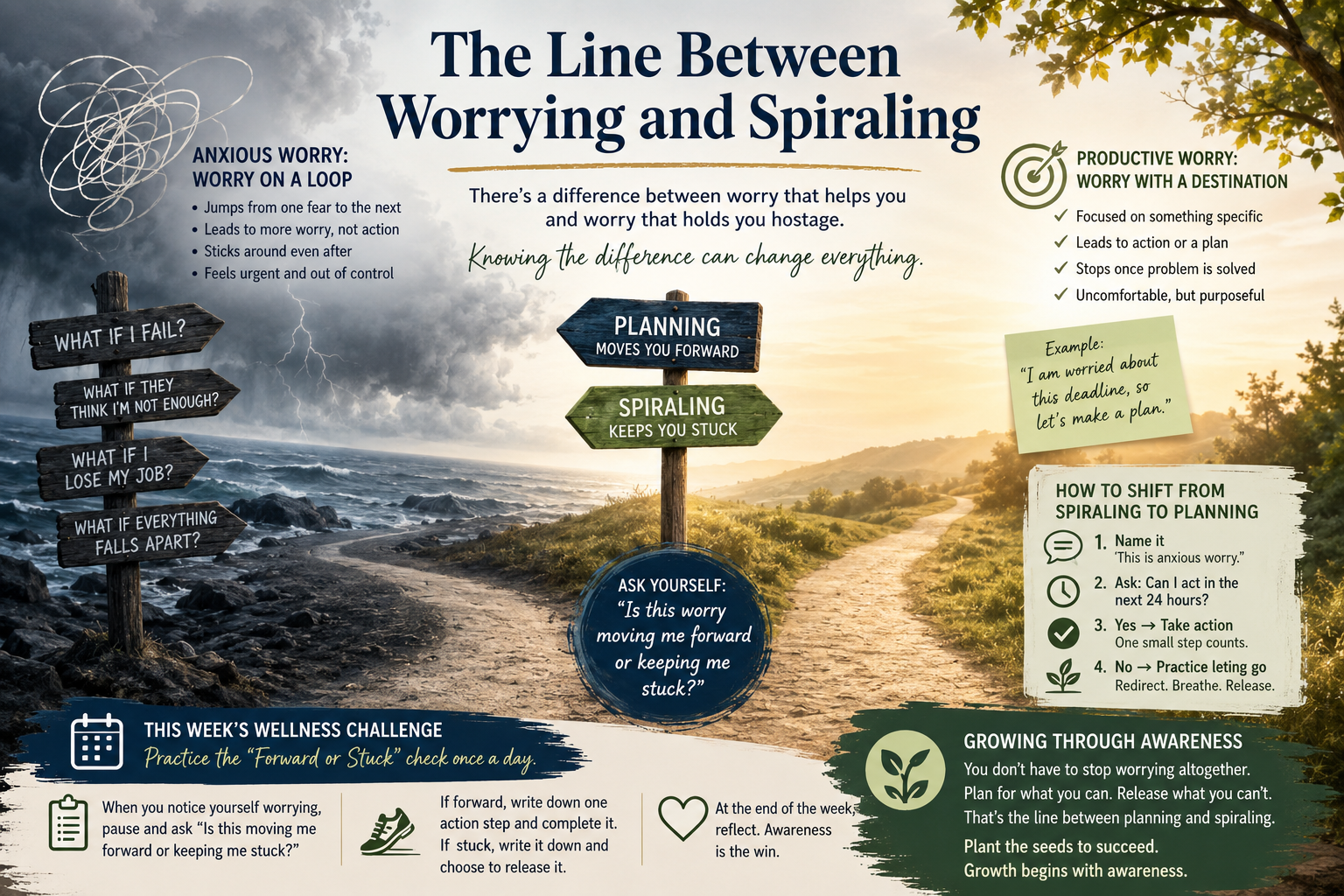
Productive worry has a destination. It is focused, specific, and leads you somewhere. It might feel uncomfortable, but it has purpose. This can help you see the difference between worry and overthinking outcomes.
“I am worried about this deadline, so let’s make a plan.”
Anxious worry, on the other hand, moves in circles. It jumps from one fear to the next, creating more worry instead of clarity. It lingers, even after nothing has changed, and it feels urgent and out of control. Here is where you spot the difference—worry motivates, while overthinking stagnates.
“What if I miss the deadline… what if I lose my job… what if everything falls apart?”
The reason this feels so real is because your brain cannot fully distinguish between a real threat and an imagined one. When your mind spirals into “what ifs,” your nervous system responds as if the worst is already happening. This blurs any difference between overthinking and worry as your stress rises.
Your body gears up for a battle that has not even begun.
That is why anxious worry is so exhausting.
💡 What to Do Instead
The goal is not to eliminate worry. The goal is to learn which worries deserve your energy. Understanding the difference between worry and overthinking will help direct your energy where it matters.
Start with one simple question
“Is this worry moving me forward or keeping me stuck?”
If it is moving you forward, take the next step.
If it is keeping you stuck, it is time to shift. Recognizing the difference between worry and overthinking in your decision making is powerful.
Here is how to break it down into something doable
-
Name it
Pause and say to yourself, “This is anxious worry.”
Labeling it creates space between you and the spiral. This pause can reveal the difference between worry and overthinking in how you respond. -
Check for action
Ask, “Can I do something about this in the next 24 hours?”
-
If yes, take one small step
Send the email
Write the outline
Make the plan
Keep it simple and specific -
If no, practice letting go
Gently redirect your attention
Come back to the present moment
Remind yourself, “This is not a problem I can solve right now”
This is where the shift happens. Not by forcing your thoughts to stop, but by choosing where your energy goes. Above all, notice the difference between worry and overthinking as you practice.
📅 This Week’s Wellness Challenge
Practice the “Forward or Stuck” check once a day. By practicing awareness, you can better understand the difference between worry and overthinking and move toward clarity.
When you notice yourself worrying, pause and ask
“Is this moving me forward or keeping me stuck?” Sometimes, this reflection reveals the difference between worry and overthinking in your routine.
If forward, write down one action step and complete it
If stuck, write down the worry and consciously choose to release it
At the end of the week, reflect
How many times did you move into action
How many times did you catch yourself in a loopBy tracking this, you’ll see your own difference between worry and overthinking in practice.
Awareness is the win
🌱 Growing Through Awareness
You do not have to stop worrying altogether. The key is to know the difference between worry and overthinking and respond accordingly.
Worry is part of being human. It means you care. It means something matters to you. Identifying the difference between worry and overthinking helps you value your thoughts.
But not every thought deserves your time, your energy, or your attention.
Learning to recognize the line between planning and spiraling is where change begins, and this awareness draws out the real difference between worry and overthinking.
Plan for what you can.
Release what you cannot.
And trust that every time you choose clarity over chaos, you are strengthening a new way forward. Awareness of the difference between worry and overthinking will make your journey smoother.
Plant the seeds to succeed. Growth begins with awareness.