There is a moment that often goes unnoticed.
It is not the breakdown or the obvious stress.
It is the quiet feeling of sitting in the middle of change and wondering, “Why does this feel harder than I expected?”
A new school year begins.
Schedules shift.
Work picks up.
Life moves forward in ways you planned for, even hoped for.
And yet, something feels off.
Your mind feels scattered.
Your patience feels shorter.
Your energy does not match the pace of your life.
Most people respond to this moment with pressure.
“I should be able to handle this.”
“I just need to get it together.”
But what if the feeling is not a failure to cope
What if it is a natural response to transition
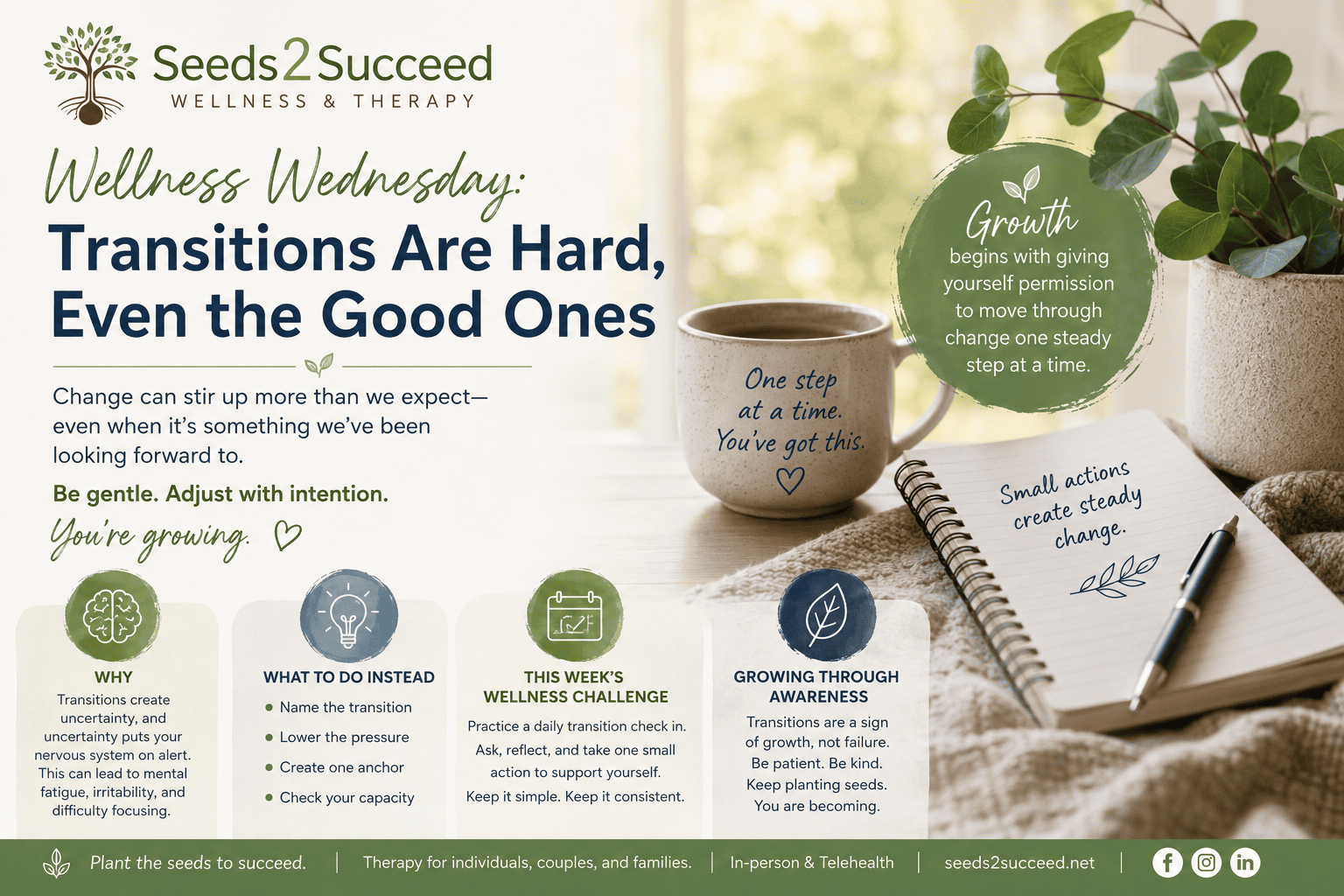
🧠 Why
The brain is designed to seek predictability.
Even positive change introduces uncertainty, and uncertainty signals the nervous system to stay alert. As routines shift, the brain works harder to process new information, adjust expectations, and reestablish a sense of control.
This is why transitions often come with mental fatigue, irritability, and difficulty focusing.
There is also a deeper layer.
Transitions do not just change what we do.
They challenge how we see ourselves.
Who am I in this new routine
Can I keep up with what is being asked of me
What if I fall behind
When the external pace of life speeds up, the internal experience often lags behind. That gap is where overwhelm begins to build.
💡 What to Do Instead
Rather than pushing yourself to adjust faster, the goal is to support your system while it recalibrates.
Start small and stay consistent.
Name the transition
Instead of saying “I am overwhelmed,” try “I am adjusting to a new routine.”
Clarity creates context, and context reduces stress.
Lower the pressure
This is not the time for perfection. Ask yourself what is good enough for this season. Protecting your energy now allows for stronger stability later.
Create one anchor
Choose one small, consistent habit each day. It might be a quiet cup of coffee, a short walk, or a few minutes of stillness. This gives your nervous system a signal that something remains steady.
Check your capacity
Before committing to more, pause and ask, “Do I have the energy for this today?”
Awareness of capacity prevents burnout before it begins.
📅 This Week’s Wellness Challenge
Practice a daily transition check in.
Take two minutes each day to ask yourself:
What am I currently adjusting to
What feels most challenging about this today
What is one small way I can support myself
Choose one simple action based on your answer. Keep it realistic and repeat it daily. Write it down or track it in your phone to build awareness and accountability.
🌱 Growing Through Awareness
Transitions are not a sign that you are falling behind.
They are a sign that something in your life is shifting and expanding.
Growth rarely feels calm while it is happening. It asks for patience, flexibility, and a willingness to meet yourself where you are.
So if you feel unsettled in this season, pause before judging it.
You are not doing anything wrong.
You are learning how to adjust.
Plant the seeds to succeed. Growth begins with giving yourself permission to move through change one steady step at a time.